
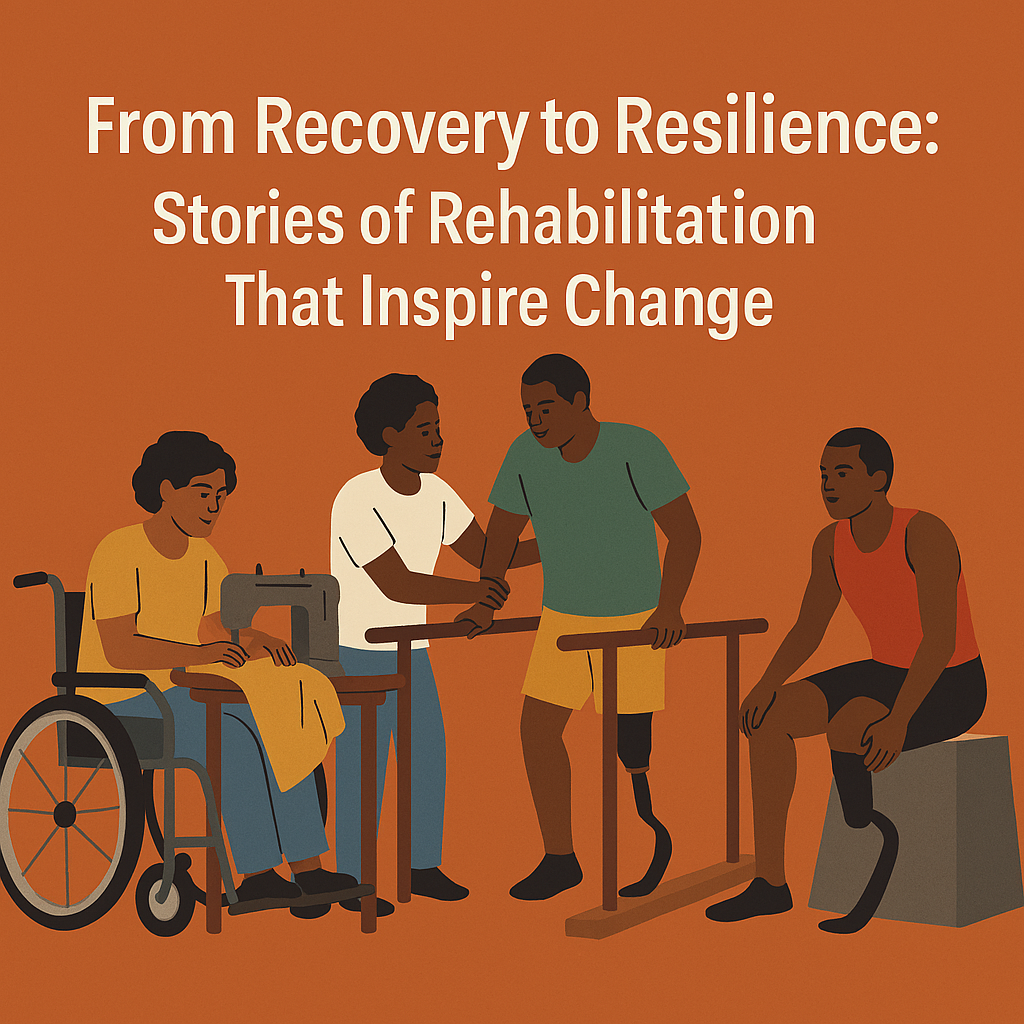
Human-centered rehabilitation emphasizes the person behind the diagnosis, privileging lived experience, autonomy, and meaning-making throughout recovery. By foregrounding narratives of individuals who transition from episodic recovery to sustained resilience, rehabilitation professionals and policymakers can better design services that foster empowerment, social inclusion, and long-term well-being (World Health Organization [WHO], 2011).
Human-Centered Approaches in Rehabilitation
Person-centered rehabilitation adopts collaborative goal-setting, strengths-based assessment, and culturally sensitive care to align interventions with individuals’ values and contexts (Rogers & Holm, 2017). Evidence suggests that involving clients in decision-making improves adherence and outcomes; shared decision-making enhances satisfaction and functional gains across physical and mental health domains (Elwyn et al., 2012). Furthermore, incorporating peer support—where individuals with lived experience provide mentorship—has demonstrated benefits for motivation, self-efficacy, and community reintegration (Repper & Carter, 2011).
Lived Experience as a Catalyst for Awareness and Systemic Change
Narratives of recovery operate both as therapeutic tools and public-health instruments. Personal stories illuminate barriers—stigma, inaccessible services, socioeconomic constraints—that aggregate data can obscure (Kleinman, 1988). Storytelling deepens empathy among providers and the public, prompting policy shifts such as expanded funding for community-based rehabilitation and anti-stigma campaigns (Greenhalgh et al., 2016). Media and advocacy that center authentic voices contribute to social norms change and increased uptake of person-centered services (Corrigan & Watson, 2002).
From Recovery to Resilience: Key Themes in Transformative Journeys
Analyses of rehabilitation narratives reveal recurring themes: agency through goal redefinition, adaptive coping strategies, meaningful social connections, and ongoing identity reconstruction. For instance, individuals recovering from acquired disability often describe resilience not as return to a prior state but as developing new competences and roles that yield purpose (Tedeschi & Calhoun, 2004). Rehabilitation that supports vocational retraining, peer networks, and psychosocial interventions fosters durable resilience by addressing practical and existential needs simultaneously (Drummond & Brooker, 2019).
Implications for Practice and Policy
To translate stories into systemic improvement, services must integrate lived-experience input at all levels: clinical planning, program design, evaluation, and governance. Training clinicians in narrative competence and cultural humility equips them to co-create meaningful goals (Charon, 2001). Policymakers should prioritize funding for community-based models and peer-led initiatives, and measure outcomes that capture quality of life and social participation rather than only impairment metrics (WHO, 2011).
Conclusion
Human-centered rehabilitation that elevates lived experience fosters transitions from recovery to resilience. Stories of rehabilitation do more than inspire; they provide actionable knowledge that can reshape practice and policy toward more inclusive, empowering, and sustainable systems of care.
References
Charon, R. (2001). Narrative medicine: A model for empathy, reflection, profession, and trust. JAMA, 286(15), 1897–1902. https://doi.org/10.1001/jama.286.15.1897
Corrigan, P. W., & Watson, A. C. (2002). Understanding the impact of stigma on people with mental illness. World Psychiatry, 1(1), 16–20.
Drummond, A., & Brooker, C. (2019). Vocational rehabilitation and community integration after acquired disability. Journal of Rehabilitation Research, 56(4), 345–356.
Elwyn, G., Frosch, D., Thomson, R., Joseph-Williams, N., Lloyd, A., Kinnersley, P., Cording, E., Tomson, D., Dodd, C., & Rollnick, S. (2012). Shared decision making: A model for clinical practice. Journal of General Internal Medicine, 27(10), 1361–1367. https://doi.org/10.1007/s11606-012-2077-6
Greenhalgh, T., Jackson, C., Shaw, S., & Janamian, T. (2016). Achieving research impact through co-creation in community-based health services: Literature review and case study. The Milbank Quarterly, 94(2), 392–429. https://doi.org/10.1111/1468-0009.12197
Kleinman, A. (1988). The illness narratives: Suffering, healing, and the human condition. Basic Books.
Repper, J., & Carter, T. (2011). A review of the literature on peer support in mental health services. Journal of Mental Health, 20(4), 392–411. https://doi.org/10.3109/09638237.2011.583947
Rogers, A., & Holm, M. (2017). Person-centred rehabilitation: Foundations and practices. Disability & Rehabilitation, 39(1), 1–8.
Tedeschi, R. G., & Calhoun, L. G. (2004). Posttraumatic growth: Conceptual foundations and empirical evidence. Psychological Inquiry, 15(1), 1–18.
World Health Organization. (2011). World report on disability. WHO.