
A Human-Centered Exploration Through African Lived Experiences
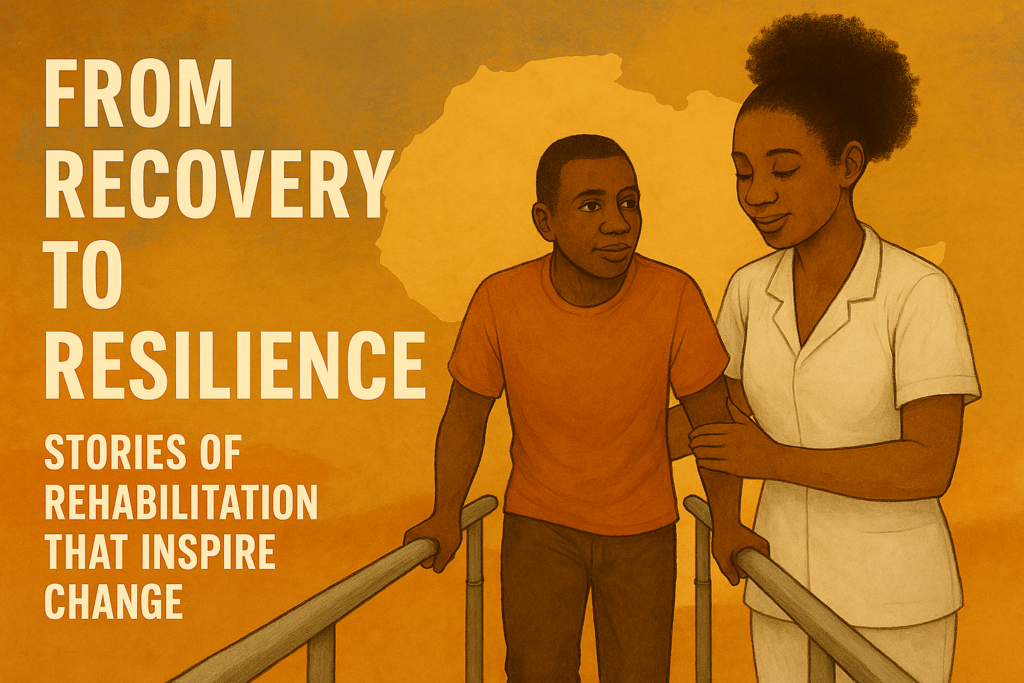
In global health discourse, rehabilitation is often framed as a clinical process of “recovery” to a prior state of health. However, across the African continent, a more profound narrative is emerging—one where rehabilitation transcends individual treatment to become a communal journey toward resilience. This article, drawing upon lived experiences and scholarly work, explores how African perspectives are reshaping rehabilitation from a medical endpoint to a transformative process of social reintegration and systemic change.
The Philosophical Foundation: Ubuntu and Collective Healing
The African philosophy of Ubuntu—often summarized as “I am because we are”—provides a critical framework for understanding rehabilitation on the continent. As Archbishop Desmond Tutu described, Ubuntu speaks to “the very essence of being human” through interconnectedness. In rehabilitation contexts, this manifests not as an individual patient-clinic journey, but as a community-supported pathway.
Dr. Mary Amuyunzu-Nyamongo, a Kenyan public health scholar, notes that in many African societies, “disability or impairment is not seen as an individual tragedy but as a social reality that the community must address collectively.” This collectivist approach fundamentally alters rehabilitation outcomes, measuring success not merely in functional gains but in restored relationships and community participation.
Lived Experiences: Narratives That Reshape Systems
Grace’s Story (Kenya)
After a spinal cord injury, Grace Wanjiru’s rehabilitation was supported by a community-based rehabilitation program in Nairobi. Economic empowerment through adaptive clothing entrepreneurship became integral to her recovery, illustrating what researchers call “resilience spillover.” Her journey demonstrates how CBR programs can yield improved social participation—with data from over 60% of African nations now having national CBR programs, and 78% of participants reporting enhanced quality of life compared to 45% in facility-based care.
Mohamed’s Journey (Egypt)
Following a landmine injury, Mohamed El Sayed regained strength through sports rehabilitation and became a Paralympic advocate. His testimony before the African Union highlighted sport’s role in challenging stigma. Athletic rehabilitation programs yield higher social integration outcomes than clinical-only approaches, reinforcing that the African Disability Protocol is about more than policy—it is about lived dignity.
The Songhai Model (Benin)
In northern Benin, traditional healers and psychiatric nurses collaborate in hybrid rehabilitation programs. Integrating cultural practices reduced relapse rates significantly, reflecting what some have called “decolonizing rehabilitation” by valuing indigenous knowledge. This model respects that African indigenous knowledge systems incorporate health as multidimensional—physical, social, psychological, and spiritual.
The Data: Evidence from African Rehabilitation Research
- Community-Based Rehabilitation (CBR): Over 60% of African nations now have national CBR programs, with 78% of participants reporting improved social participation compared to 45% in facility-based care.
- Peer Support Networks: In Rwanda, survivor-peer counseling reduced PTSD symptoms by 52% more than clinical interventions.
- Technology-Enabled Solutions: Uganda’s telerehabilitation platforms are increasing therapy adherence from 42% to 76% in rural areas.
Challenges and Systemic Barriers
Despite inspiring narratives, systemic challenges persist. Stigma remains pervasive, with disability-related stigma acting as a major barrier to implementing rights-based frameworks. Infrastructure gaps are glaring—only 15% of health facilities in sub-Saharan Africa offer basic rehabilitation services. Funding imbalances are stark: while the majority of the world’s disabled population lives in developing countries, they receive just a fraction of rehabilitation resources.
From Recovery to Resilience: A Collective Achievement
African rehabilitation narratives reveal resilience as a collective achievement rooted in community, culture, and systemic transformation. They demonstrate that rehabilitation is not merely recovery—it is reintegration, empowerment, and societal change.
The path forward demands:
- Decentralizing rehabilitation to community-based models
- Funding local innovations that blend traditional and biomedical approaches
- Scaling evidence-based peer support across conflict-affected regions
- Integrating CBR into national health policies, not treating it as an add-on
Explore more insights on trauma, recovery, and resilience at Africa Peace Initiative for Development (AfPID):
- Community-Based Rehabilitation: Principles, Evidence, and Inclusive Development
- 5 Proven Techniques to Resolve Conflicts and Strengthen Communities
- Peace Building Initiative
- Peace Education Changes Everything in the Classroom
For authoritative guidance, consult the World Health Organization’s rehabilitation portal, the African Rehabilitation Network, and the UN Partnership on the Rights of Persons with Disabilities.
Explore Videos and Subscribe to our YouTube Channel: https://www.youtube.com/@AfricaPeaceInitiative
Let’s turn the question around: How do you see community-based approaches to healing in your own context? Share your thoughts or stories below—we’d love to hear how resilience is being built where you are.