
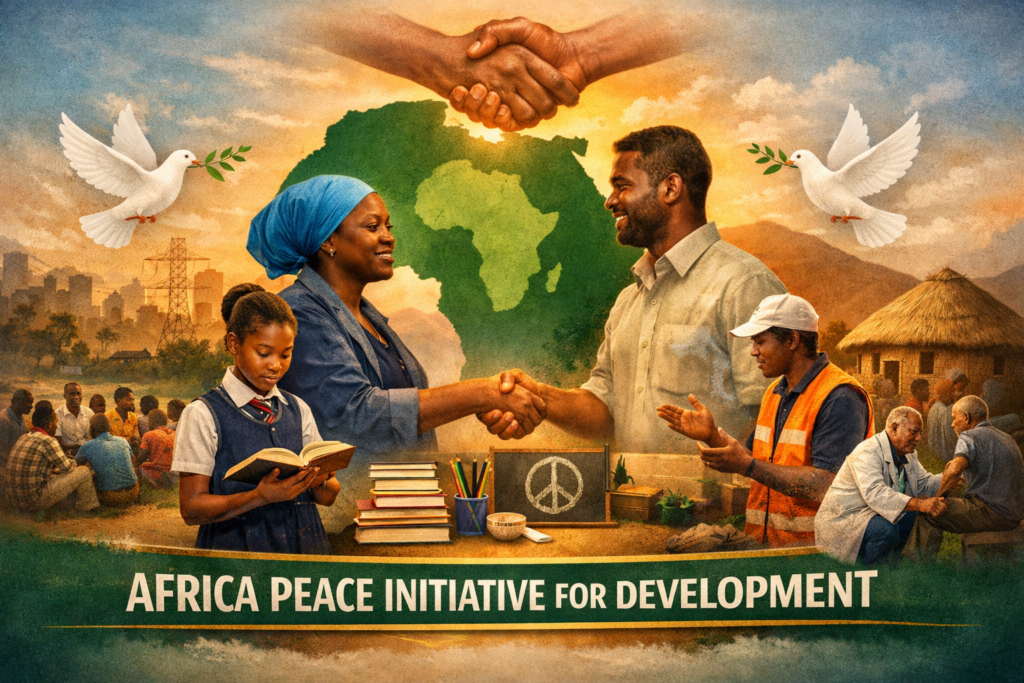
Across the vast and diverse landscapes of Africa, the yearning for stability and harmony is universal. While the echoes of conflict can be loud, the quiet, persistent work of community-led peacebuilding is often more transformative. At the forefront of this movement is the Africa Peace Initiative for Development (AfPID) , a pan-African non-governmental organisation dedicated to fostering sustainable development and social cohesion by addressing the root causes of conflict through dialogue, education, and community empowerment.
As an Africa-led organisation, AfPID rejects the paternalistic models of the past and instead focuses on nurturing local ownership. By investing in community-led solutions, AfPID is not just treating the symptoms of violence—it is pulling out the roots of discord and planting seeds for a future where peace is not just an absence of war, but a lived reality.
Our Story: Nurturing Harmony from the Ground Up
AfPID was founded on the understanding that sustainable peace cannot be imported or imposed; it must be grown from within. Our approach is grounded in the recognition that communities have the inherent capacity to resolve their own conflicts if provided with the right tools, support, and opportunities. We believe that peace is not merely the absence of war but the presence of justice, inclusion, and resilient institutions.
Our name reflects this dual commitment. “Peace” is not a passive state but an active, ongoing process of building understanding and trust. “Development” provides the tangible foundation—education, livelihoods, and healthcare—that makes peace worth keeping. Together, these forces create a positive feedback loop: peace enables development, and development sustains peace.
Headquartered in Nairobi, Kenya, with an additional office in Springfield, Massachusetts, USA, AfPID draws on a global network of expertise while remaining firmly rooted in the realities of African communities.
Our Core Programs: Building Blocks of a Peaceful Society
AfPID’s work is organised around four interconnected pillars, each designed to address a distinct dimension of conflict while reinforcing the others.
1. Peace Education and Youth Empowerment
Education is the most powerful tool for breaking cycles of violence. AfPID’s Peace Education programmes equip young people—who make up the majority of Africa’s population—with the skills and confidence to lead peacebuilding efforts in their own communities. These initiatives go beyond theoretical instruction, providing practical training in:
- Non-violent conflict resolution
- Emotional regulation and empathy building
- Leadership and civic engagement
- Critical thinking and media literacy
As one of AfPID’s key thematic areas, Peace Education is integral to creating a culture where young people see themselves not as passive victims of conflict but as active architects of their own futures.
2. Conflict Mediation and Resolution
At the heart of AfPID’s work is the belief that most disputes can be resolved through dialogue rather than violence. Our trained mediators work directly with conflicting parties—whether in families, between ethnic groups, or across community lines—to foster open communication and rebuild trust.
The process is grounded in evidence-based techniques, including structured community dialogues, restorative justice practices, and the revitalisation of customary justice systems. These methods have been shown to reduce violence, improve inter-group social cohesion, and restore relationships in contexts ranging from pastoralist land disputes in the Horn of Africa to post-election tensions in the Great Lakes region.
3. Counselling and Rehabilitation of Conflict Victims
Conflict leaves deep psychological wounds. Without healing, trauma can be passed from parent to child, perpetuating cycles of violence for generations. AfPID’s Counselling and Rehabilitation programme provides essential mental health and psychosocial support to survivors of conflict-related violence, including refugees, internally displaced persons, and victims of sexual violence.
Recognising that professional mental health services are scarce in many parts of Africa, AfPID uses a task-shifting model. Community health workers and trained peer counsellors deliver evidence-based interventions such as psychological first aid, trauma-focused cognitive behavioural therapy, and community-based support groups. These services are culturally adapted, trauma-informed, and delivered in local languages.
4. Community Growth and Livelihood Support
Peace cannot take root in empty stomachs. AfPID’s Community Growth pillar supports sustainable projects that restore hope, rebuild livelihoods, and strengthen social bonds in vulnerable areas. These include:
- Vocational training for youth and women
- Small business grants and savings groups
- Agricultural cooperatives and food security initiatives
- Infrastructure rehabilitation in post-conflict zones
By addressing the economic drivers of conflict, these programmes reduce the desperation that armed groups exploit and create tangible incentives for peaceful coexistence.
Our Guiding Principles: The Bedrock of Effective Peacebuilding
Ubuntu: “I Am Because We Are”
AfPID’s work is deeply informed by the African philosophy of Ubuntu—the understanding that our humanity is inextricably linked to the humanity of others. In peacebuilding practice, this means shifting from individualistic approaches to collective, community-owned processes. Recovery is not measured solely by an individual’s functional gains but by restored relationships, community participation, and the rebuilding of social fabric.
Local Ownership, Not Extractive Aid
For decades, international peacebuilding has been criticised for being donor-driven and disconnected from local realities. AfPID is committed to a different model: one where communities are not passive recipients but active partners in designing and implementing solutions. This means investing in local leadership, respecting traditional governance structures, and ensuring that resources flow directly to grassroots organisations.
Integration and Holism
Conflict is rarely caused by a single factor. AfPID’s programming recognises that peace, health, education, and economic opportunity are deeply interconnected. A child who cannot attend school is more vulnerable to recruitment by armed groups. A survivor who does not receive mental health support may struggle to maintain stable employment. By integrating our interventions, we address the whole person and the whole community.
Impact: Stories of Change
Voices from the Ground
“AfPID helped my community find peace and rebuild trust after years of conflict. Thanks to AfPID, I learned how to mediate disputes and support lasting harmony.” — Community member, testimonial featured on AfPID’s website
While quantitative impact data is still emerging, AfPID’s growing network of community mediators, peace education graduates, and rehabilitated conflict survivors testifies to the organisation’s effectiveness. In 2025 alone, AfPID-supported programmes reached hundreds of individuals across multiple African countries, providing counselling, mediation, and livelihood support.
Alignment with Global Frameworks
AfPID’s work directly contributes to the United Nations Sustainable Development Goals (SDGs) , particularly:
- SDG 16 (Peace, Justice and Strong Institutions) : Promoting peaceful and inclusive societies, providing access to justice for all, and building effective, accountable institutions at all levels.
- SDG 3 (Good Health and Well-being) : Ensuring healthy lives and promoting well-being for all, including mental health and psychosocial support for conflict survivors.
- SDG 4 (Quality Education) : Ensuring inclusive and equitable quality education and promoting lifelong learning opportunities, including peace education.
AfPID also aligns with the African Union’s Agenda 2063, which envisions “a peaceful and secure Africa” with “silencing the guns by 2020” as a flagship project. By working at the community level, AfPID contributes to the grassroots implementation of this continental vision.
Partners and Funding
Effective peacebuilding requires collaboration across sectors. AfPID partners with local civil society organisations, faith-based groups, traditional leaders, and international agencies to maximise its reach and impact. While specific funding sources are not publicly listed on the organisation’s website, AfPID operates on a model that prioritises local fundraising and in-kind community contributions, ensuring sustainability and local ownership.
For organisations interested in collaborating with AfPID, the Partnership Page provides details on how to support peacebuilding initiatives across Africa.
How You Can Get Involved
Building peace is a collective responsibility. Whether you are an individual, a corporation, or a foundation, there are multiple ways to support AfPID’s mission:
- Donate: Financial contributions support community mediation training, peace education materials, and mental health services for survivors.
- Volunteer: AfPID welcomes skilled volunteers in areas such as conflict resolution training, mental health counselling, fundraising, and communications.
- Partner: Organisations can collaborate with AfPID to implement joint programmes, share resources, or advocate for peace policies.
- Subscribe: Stay updated on AfPID’s work by subscribing to the newsletter via the Home Page.
To join the movement, visit the Get Involved page or email info@afpid.org.
Latest News and Insights
AfPID regularly publishes articles on peacebuilding, mental health, community rehabilitation, and health advocacy. Recent highlights from the AfPID Blog include:
- 7 Powerful Health Advocacy Campaigns Transforming Africa’s Public Health Landscape – Exploring youth-led malaria initiatives, edutainment, and social listening driving policy change.
- Health Empowerment in Africa: Building Resilience, One Community at a Time – Shifting from fragile, disease-centred systems to resilient, people-centred health empowerment.
- Breaking Barriers: Advancing Inclusive Healthcare for Persons with Disabilities – Addressing systemic, attitudinal, and communication obstacles to equitable care.
- From Recovery to Resilience: Stories of Rehabilitation That Inspire Change in Africa – Human-centred exploration through African lived experiences.
- 5 Proven Techniques to Resolve Conflicts and Strengthen Communities – Evidence-based strategies for transforming discord into lasting peace.
These resources offer practical guidance for practitioners, policymakers, and community members seeking to deepen their understanding of peacebuilding and community development.
Conclusion: A Call to Partnership
The Africa Peace Initiative for Development is more than an organisation—it is a movement. A movement that believes in the power of ordinary people to achieve extraordinary things when they are empowered, equipped, and trusted. A movement that refuses to accept violence as inevitable and instead insists that peace is not only possible but practical.
Yet AfPID cannot do this work alone. The challenges are immense: from the ongoing conflicts in the Sahel and the Great Lakes to the mental health crisis among displaced populations, the need for community-led peacebuilding has never been greater.
Stand with us. Whether through a donation, a partnership, or simply by sharing our message, you can help plant the seeds of a peaceful Africa. Together, we can build a continent where every child grows up not in the shadow of war, but in the warmth of community, dialogue, and hope.
Explore more insights on peacebuilding, mental health, and community resilience at the Africa Peace Initiative for Development (AfPID):
- Peace Education Changes Everything in the Classroom – building inclusive educational environments for all children.
- Community‑Based Rehabilitation: Principles, Evidence, and Inclusive Development – extending healing beyond clinical settings.
- Rehabilitation Beyond the Clinic: Community Support and Social Reintegration in the African Context – holistic pathways to recovery.
For authoritative guidance, consult the African Union’s Peace and Security Department, the United Nations Development Programme’s peacebuilding portal, and the World Health Organization’s mental health in emergencies page.
Follow us on YouTube: https://www.youtube.com/@AfricaPeaceInitiative