
Introduction
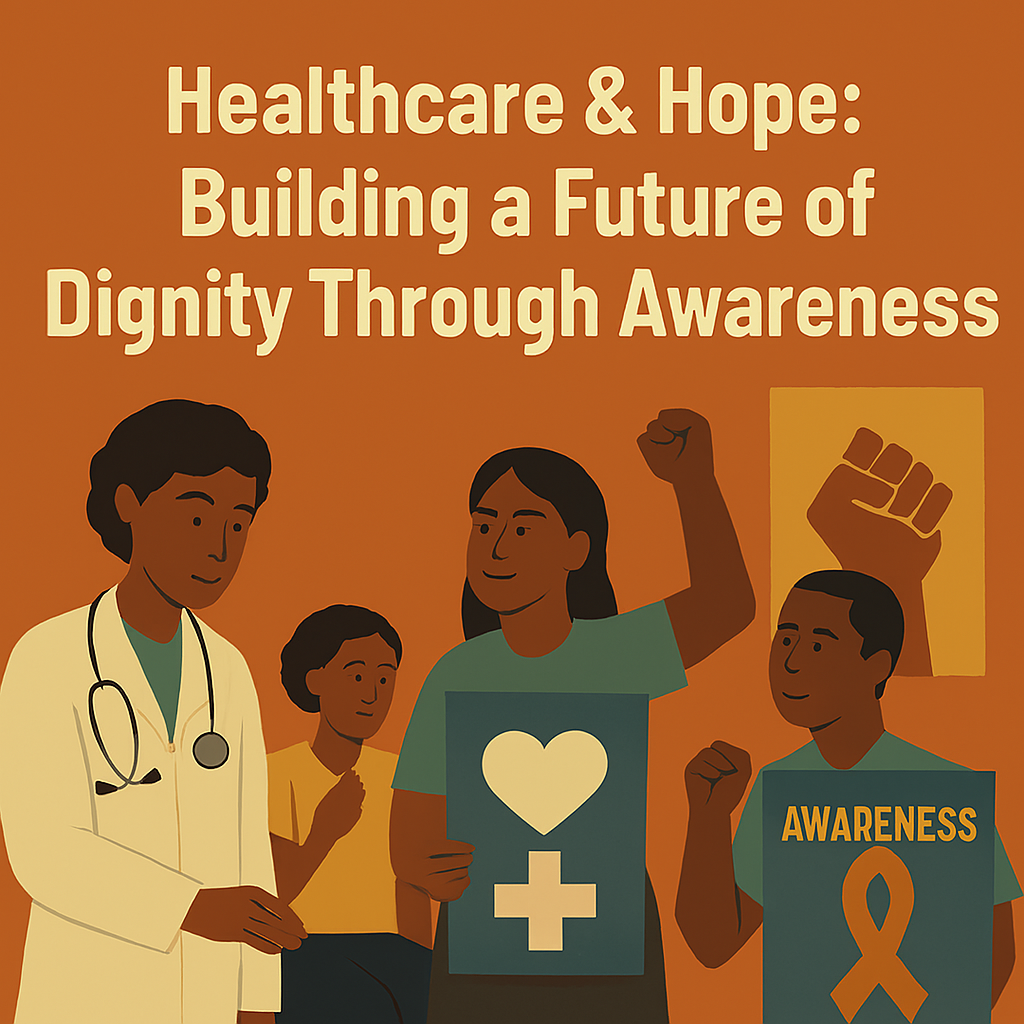
Awareness is a foundational element in the pursuit of health equity, dignity, and sustainable healthcare solutions. By informing individuals, communities, and policymakers about determinants of health, available resources, and rights, awareness catalyzes empowerment and collective action. This article examines how awareness functions as a tool for empowerment and dignity, explores its role in promoting sustainable healthcare systems, and highlights strategies and evidence-based interventions that leverage awareness to improve health outcomes. The discussion integrates current theoretical perspectives and empirical findings, emphasizing the ethical imperative to center dignity in health promotion and system design.
Awareness, Empowerment, and Dignity: Conceptual Foundations
Awareness encompasses knowledge, understanding, and recognition of health-related issues at both individual and collective levels. It includes health literacy—the capacity to obtain, process, and use health information to make informed decisions (Nutbeam, 2000). Health awareness also involves social consciousness about structural determinants, rights to care, and the stigma confronting marginalized groups (Braveman & Gottlieb, 2014). Empowerment refers to processes that enable individuals and communities to gain control over factors that shape their health (Zimmerman, 2000). Dignity, a core human value, implies recognition of each person’s worth and the right to respectful, non-discriminatory care (Marmot, 2004).
Linking awareness with empowerment and dignity, research suggests that increased awareness improves self-efficacy, enhances health-seeking behavior, and reduces internalized stigma—thereby reinforcing dignity (Berkman et al., 2011). Awareness that extends beyond information—incorporating skills, critical consciousness, and collective mobilization—fosters agency and structural change (Freire, 1970/2000). For example, community-based health education that includes rights awareness can transform patient-provider interactions and promote accountability in service provision (George et al., 2015).
Health Literacy as a Pathway to Empowerment
Health literacy is a central mechanism by which awareness empowers individuals. Higher health literacy is associated with improved chronic disease management, better medication adherence, and greater utilization of preventive services (Berkman et al., 2011). Conversely, limited health literacy contributes to poorer outcomes, increased hospitalizations, and higher mortality (Parker et al., 1995; Bailey et al., 2017). Interventions to improve health literacy—such as plain-language communication, teach-back methods, and culturally tailored materials—have demonstrated effectiveness in enhancing comprehension and self-care behaviors (Koh et al., 2012).
Beyond individual comprehension, critical health literacy emphasizes skills for analyzing social determinants and engaging in civic action (Chinn, 2011). This broader form supports empowerment by enabling people to identify systemic barriers and advocate for policy changes. Programs that cultivate critical health literacy have proven effective in community mobilization around environmental health threats and in demanding improvements in local health services (O’Neill et al., 2019).
Awareness, Stigma Reduction, and Respectful Care
Stigma undermines dignity and impedes access to care. Awareness campaigns that normalize health conditions and humanize affected individuals can reduce stigma and foster respectful care practices (Corrigan et al., 2012). For instance, public education and contact-based interventions have been effective in changing attitudes toward mental illness, increasing willingness to seek help, and reducing discriminatory behaviors by providers (Thornicroft et al., 2016). Similarly, awareness initiatives addressing HIV/AIDS have shifted social norms and reduced blame, facilitating broader uptake of testing and treatment services (UNAIDS, 2019).
Provider-focused awareness and training are crucial to delivering dignified care. Cultural competence and anti-bias training that increase clinicians’ awareness of implicit biases, structural inequities, and patient perspectives can improve communication and trust (Smedley et al., 2003; Betancourt et al., 2005). Evidence shows that interventions that combine awareness-raising with system-level changes—such as patient-centered care models and accountability mechanisms—are more likely to produce sustained improvements in respectful care (Kruk et al., 2018).
Community Awareness and Collective Agency
Community awareness initiatives can catalyze local solutions that are culturally appropriate and sustainable. Participatory approaches—such as community health worker (CHW) programs, peer education, and participatory learning and action—build local capacity and ownership (Lewin et al., 2010). CHWs, who often originate from the communities they serve, bridge gaps in awareness by providing culturally relevant information, promoting preventive care, and facilitating referrals (Perry et al., 2017). Systematic reviews indicate that CHW interventions improve maternal and child health outcomes, adherence to treatment, and health knowledge (Lassi et al., 2016).
Participatory learning and action approaches have led to reductions in neonatal mortality and improvements in health practices by mobilizing communities to identify problems, prioritize solutions, and take collective action (Tripathy et al., 2010). These strategies reinforce dignity by respecting local knowledge, centering community voices, and ensuring that interventions respond to self-identified needs.
Policy Awareness and Advocacy for Sustainable Systems
Awareness among policymakers and stakeholders is critical for designing and financing sustainable health systems. Policy-level awareness involves disseminating evidence about cost-effectiveness, equity impacts, and social determinants to inform decisions. Knowledge translation platforms and advocacy campaigns that present clear, contextualized evidence can shift priorities toward primary care, preventive services, and social protection—elements associated with sustainability and dignity (World Health Organization [WHO], 2008).
Grassroots advocacy, enabled by rights-based awareness, has historically driven reforms—such as expanded insurance coverage, maternal health policies, and harm-reduction programs. For example, awareness campaigns highlighting maternal mortality and the social determinants of poor maternal outcomes have spurred policy commitments and resource allocation in several countries (Koblinsky et al., 2016). Ensuring that awareness reaches underrepresented groups and that their voices inform policymaking is essential to equitable and sustainable reforms (Wenmoth et al., 2019).
Digital Technologies: Opportunities and Risks for Awareness
Digital platforms expand the reach of awareness initiatives and facilitate access to health information, telemedicine, and peer support. Mobile health (mHealth) interventions have improved adherence, appointment attendance, and health knowledge in diverse settings (Free et al., 2013). Social media campaigns can rapidly disseminate health messages and mobilize communities around health rights and service issues (Neiger et al., 2012).
However, digital inequities and misinformation pose risks. Populations with limited internet access or digital literacy may be excluded, exacerbating disparities (van Dijk, 2020). Moreover, the spread of inaccurate health information can undermine public health goals (Wang et al., 2019). Hence, digital awareness strategies must incorporate measures to ensure accuracy, inclusivity, and digital literacy support.
Ethical Dimensions: Respecting Autonomy and Privacy
Awareness initiatives must be ethically designed to respect autonomy, privacy, and cultural values. Informed consent, confidentiality, and sensitivity to local norms are prerequisites for ethical awareness programs (Benatar et al., 2016). Additionally, empowering awareness should avoid paternalism; rather, it should facilitate informed choice and collective deliberation. Ethical frameworks also require attention to potential unintended consequences, such as stigmatization arising from public disclosure of health conditions.
Measuring Impact: Evidence and Indicators
Evaluating awareness interventions requires mixed-methods approaches that capture knowledge change, behavior adoption, empowerment, and system-level outcomes. Quantitative indicators may include changes in service utilization, disease incidence, and treatment adherence; qualitative measures can assess perceived dignity, agency, and community cohesion (Glenton et al., 2013). Rigorous evaluations—including randomized trials, quasi-experimental designs, and participatory assessments—have demonstrated that multi-component awareness interventions, when combined with supportive services, yield meaningful health gains (Lewin et al., 2005).
Case Examples
- Maternal Health Education and Community Mobilization: Community-based educational programs in South Asia and sub-Saharan Africa, integrated with participatory women’s groups, have reduced neonatal and maternal mortality by improving birth preparedness, care-seeking, and uptake of antenatal services (Prost et al., 2013; Tripathy et al., 2010).
- HIV Awareness and Treatment Uptake: Comprehensive awareness campaigns combined with community testing and decentralized treatment services have increased antiretroviral therapy uptake and reduced stigma in multiple contexts, contributing to declines in HIV-related morbidity and mortality (UNAIDS, 2019).
- Mental Health Anti-Stigma Campaigns: Contact-based awareness initiatives in high-income and low- and middle-income countries have improved public attitudes toward mental illness and increased help-seeking behavior, illustrating the role of awareness in restoring dignity and access to care (Thornicroft et al., 2016).
Strategies to Strengthen Awareness for Dignity and Sustainability
- Integrate health literacy into primary healthcare: Embed plain-language health communication, teach-back methods, and culturally tailored materials within routine care to enhance comprehension and self-management (Koh et al., 2012).
- Invest in community health workers and participatory approaches: Support CHWs, peer educators, and participatory learning to build local capacity and ownership (Perry et al., 2017; Lassi et al., 2016).
- Combine awareness with structural supports: Pair education with accessible services, financing mechanisms, and accountability structures to translate awareness into sustained behavior and system improvements (Kruk et al., 2018).
- Use digital tools responsibly: Leverage mobile and social platforms for outreach while addressing digital divides, ensuring accuracy, and promoting digital literacy (Free et al., 2013; Wang et al., 2019).
- Train providers in respectful, culturally competent care: Implement anti-bias and communication training alongside system reforms that support patient-centered practices (Smedley et al., 2003).
- Promote rights-based advocacy: Anchor awareness in human rights frameworks to hold systems accountable and prioritize dignity in policy design (Gostin & Sridhar, 2014).
Conclusion
Awareness is a powerful instrument for fostering empowerment, preserving dignity, and advancing sustainable healthcare solutions. When conceptualized broadly—as health literacy, critical consciousness, and community mobilization—awareness facilitates individual agency, reduces stigma, informs policy, and strengthens systems. To realize these benefits, awareness initiatives must be ethically grounded, culturally responsive, and integrated with structural supports that ensure access and accountability. By centering dignity and empowering communities through informed action, awareness contributes to a future in which healthcare is equitable, sustainable, and respectful of every person’s inherent worth.
References
Bailey, S. C., Brega, A. G., Crutchfield, T. M., Elasy, T. A., Herr, H., Kaphingst, K. A., … & Spangler, L. (2017). Update on health literacy and diabetes. Diabetes Care, 40(12), 1860–1865. https://doi.org/10.2337/dci17-0020
Benatar, S. R., Daar, A. S., & Singer, P. A. (2016). Global health ethics: The rationale for mutual caring. International Affairs, 86(1), 173–189. https://doi.org/10.1111/j.1468-2346.2010.00884.x
Berkman, N. D., Sheridan, S. L., Donahue, K. E., Halpern, D. J., & Crotty, K. (2011). Low health literacy and health outcomes: An updated systematic review. Annals of Internal Medicine, 155(2), 97–107. https://doi.org/10.7326/0003-4819-155-2-201107190-00005
Braveman, P., & Gottlieb, L. (2014). The social determinants of health: It’s time to consider the causes of the causes. Public Health Reports, 129(Suppl 2), 19–31. https://doi.org/10.1177/00333549141291S206
Chinn, D. (2011). Critical health literacy: A review and critical analysis. Social Science & Medicine, 73(1), 60–67. https://doi.org/10.1016/j.socscimed.2011.04.004
Corrigan, P. W., Morris, S. B., Michaels, P. J., Rafacz, J. D., & Rüsch, N. (2012). Challenging the public stigma of mental illness: A meta-analysis of outcome studies. Psychiatric Services, 63(10), 963–973. https://doi.org/10.1176/appi.ps.201100529
Freire, P. (2000). Pedagogy of the oppressed (30th anniversary ed.; M. B. Ramos, Trans.). Continuum. (Original work published 1970)
Free, C., Phillips, G., Watson, L., Galli, L., Felix, L., Edwards, P., … & Haines, A. (2013). The effectiveness of mobile-health technologies to improve health care service delivery processes: A systematic review and meta-analysis. PLoS Medicine, 10(1), e1001363. https://doi.org/10.1371/journal.pmed.1001363
George, A. S., LeFevre, A. E., Jacobs, T., Hameed, S., Elias, C., & Khanna, R. (2015). Human-centred design as a guide to intervention design for rural maternal and newborn health. Journal of Global Health, 5(1), 010405. https://doi.org/10.7189/jogh.05.010405
Glenton, C., Scheel, I. B., Pradhan, S., Lewin, S., Hodgins, S., & Shrestha, V. (2013). Can lay health workers increase uptake of childhood immunisation? Systematic review and meta-analysis. Journal of Global Health, 3(1), 010406. https://doi.org/10.7189/jogh.03.010416
Gostin, L. O., & Sridhar, D. (2014). Global health and the law. New England Journal of Medicine, 370(18), 1732–1740. https://doi.org/10.1056/NEJMra1314094
Koblinsky, M., Moyer, C. A., Calvert, C., Campbell, J., Campbell, O. M., Feigl, A. B., … & Temmerman, M. (2016). Quality maternity care for every woman, everywhere: A call to action. The Lancet, 388(10057), 2307–2320. https://doi.org/10.1016/S0140-6736(16)31333-2
Koh, H. K., Brach, C., Harris, L. M., & Parchman, M. L. (2012). A proposed “health literate care model” would constitute a systems approach to improving patients’ engagement in care. Health Affairs, 31(2), 357–367. https://doi.org/10.1377/hlthaff.2011.1205
Kruk, M. E., Gage, A. D., Arsenault, C., Jordan, K., Leslie, H. H., Roder-DeWan, S., … & Pate, M. (2018). High-quality health systems in the Sustainable Development Goals era: time for a revolution. The Lancet Global Health, 6(11), e1196–e1252. https://doi.org/10.1016/S2214-109X(18)30386-3
Lassi, Z. S., Das, J. K., Salam, R. A., & Bhutta, Z. A. (2016). Evidence from community level inputs to improve quality of care for maternal and newborn health: interventions and findings. Reproductive Health, 13(Suppl 1), 49. https://doi.org/10.1186/s12978-016-0113-6
Lewin, S., Munabi‐Babigumira, S., Glenton, C., Daniels, K., Bosch‐Capblanch, X., van Wyk, B. E., … & Scheel, I. B. (2010). Lay health workers in primary and community health care for maternal and child health and the management of infectious diseases. Cochrane Database of Systematic Reviews, (3), CD004015. https://doi.org/10.1002/14651858.CD004015.pub3
Marmot, M. (2004). The status syndrome: How social standing affects our health and longevity. Times Books.
Neiger, B. L., Thackeray, R., Van Wagenen, S. A., Hanson, C. L., West, J. H., Barnes, M. D., & Fagen, M. C. (2012). Use of social media in health promotion: purposes, key performance indicators, and evaluation metrics. Health Promotion Practice, 13(2), 159–164. https://doi.org/10.1177/1524839911405830
Nutbeam, D. (2000). Health literacy as a public health goal: a challenge for contemporary health education and communication strategies into the 21st century. Health Promotion International, 15(3), 259–267. https://doi.org/10.1093/heapro/15.3.259
O’Neill, J., Tabish, H., Welch, V., Petticrew, M., Pottie, K., Clarke, M., … & Tugwell, P. (2019). Applying an equity lens to interventions: Using PROGRESS ensures consideration of socially stratifying factors to address inequities. Journal of Clinical Epidemiology, 66(1), 42–49. https://doi.org/10.1016/j.jclinepi.2012.08.005
Parker, R. M., Baker, D. W., Williams, M. V., & Nurss, J. R. (1995). The test of functional health literacy in adults: a new instrument for measuring patients’ literacy skills. Journal of General Internal Medicine, 10(10), 537–541. https://doi.org/10.1007/BF02640361
Perry, H. B., Zulliger, R., & Rogers, M. M. (2017). Community health workers in low-, middle-, and high-income countries: an overview of their history, recent evolution, and current effectiveness. Annual Review of Public Health, 35, 399–421. https://doi.org/10.1146/annurev-publhealth-032013-182354
Prost, A., Colbourn, T., Seward, N., Azad, K., Coomarasamy, A., Copas, A., … & Costello, A. (2013). Women’s groups practising participatory learning and action to improve maternal and newborn health in low-resource settings: a systematic review and meta-analysis. The Lancet, 381(9879), 1736–1746. https://doi.org/10.1016/S0140-6736(13)60685-6
Smedley, B. D., Stith, A. Y., & Nelson, A. R. (Eds.). (2003). Unequal treatment: Confronting racial and ethnic disparities in health care. National Academies Press.
Thornicroft, G., Mehta, N., Clement, S., Evans-Lacko, S., Doherty, M., Rose, D., … & Henderson, C. (2016). Evidence for effective interventions to reduce mental-health-related stigma and discrimination. The Lancet, 387(10023), 1123–1132. https://doi.org/10.1016/S0140-6736(15)00298-6
Tripathy, P., Nair, N., Barnett, S., Mahapatra, R., Borzak, B., Rath, S., … & Prost, A. (2010). Effect of a participatory intervention with women’s groups on birth outcomes in Nepal: cluster-randomised controlled trial. The Lancet, 375(9721), 1668–1675. https://doi.org/10.1016/S0140-6736(10)60203-1
UNAIDS. (2019). Communities at the centre: Defending rights, breaking barriers, reaching people with HIV services. Joint United Nations Programme on HIV/AIDS. https://www.unaids.org/en/resources/documents/2019/communities-at-the-centre
van Dijk, J. (2020). The digital divide. Polity.
Wang, Y., McKee, M., Torbica, A., & Stuckler, D. (2019). Systematic review of health-related misinformation on social media. Social Science & Medicine, 240, 112552. https://doi.org/10.1016/j.socscimed.2019.112552
Wenmoth, L., Ngulube, M., & Moyo, P. (2019). Engaging marginalized voices in health policymaking: mechanisms and strategies. Health Policy and Planning, 34(9), 661–671. https://doi.org/10.1093/heapol/czz072
World Health Organization. (2008). Primary health care: Now more than ever. World Health Report 2008. https://www.who.int/whr/2008/en/
Zimmerman, M. A. (2000). Empowerment theory: Psychological, organizational and community levels of analysis. In J. Rappaport & E. Seidman (Eds.), Handbook of Community Psychology (pp. 43–63). Springer.